
What does PPWR stand for?
The Packaging and Packaging Waste Regulation (PPWR) is the new EU regulation on packaging materials and packaging waste.
It establishes uniform requirements for packaging materials across Europe and aims to reduce packaging waste, improve the recyclability of packaging materials and promote the circular economy concept.
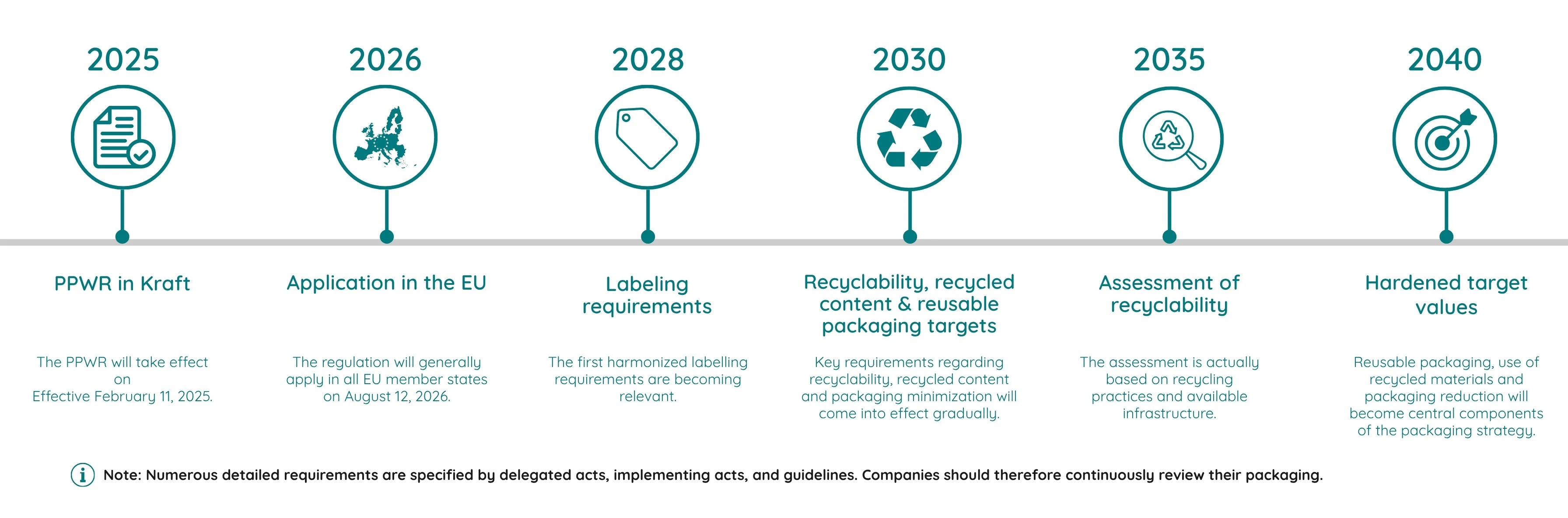
The Regulation applies to almost all packaging materials placed on the market in the European Union, including retail, postal, transport and industrial packaging materials. Following its entry into force on 11 February 2025, the provisions have been applied gradually in the Member States since 12 August 2026. Over the coming years, the rules on packaging are to be tightened gradually up to 2030 and beyond.
Why is PPWR compliance important for businesses?
The PPWR affects decisions on packaging materials along the entire supply chain. Companies should assess at an early stage which packaging materials will meet future requirements and their potential for implementing reusable and circular solutions.
Early implementation offers numerous advantages:
Less packaging waste
Lower costs per cycle
Smooth packaging processes
Improved product protection
Greater inventory transparency regarding container stock levels
Stronger ESG positioning
Reduced reliance on single-use materials
Articles 5 to 13 in overview
Articles 5 to 13 set out key sustainability requirements for packaging materials.
| Article | Contents |
|---|---|
| Article 5: Ingredients | Reducing or avoiding problematic substances in packaging materials |
| Article 6: Recyclability | Designing packaging materials so that they can be easily recycled |
| Article 7: Use of recycled materials | Using more recycled material in packaging materials |
| Article 8: Bio-based raw materials | Exploring sustainable alternatives to fossil-based raw materials |
| Article 9: Compostability | Use compostable packaging materials only where they are appropriate |
| Article 10: Reducing packaging waste | Design packaging materials to be smaller, lighter and more material-efficient |
| Article 11: Reusability | Using packaging multiple times to cut waste |
| Article 12 & 13: Labelling requirements | PPWR-compliant labelling: information on material composition, the proportion of recycled content, reusability and correct disposal |
What exactly do companies need to do to comply with PPWR requirements?
The requirements applicable to a company depend on its role within the PPWR, as well as on the packaging materials and distribution channels it uses.
In particular, companies should:
- Determine their role in the supply chain: Check whether, for the purposes of the PPWR, you are, for example, a producer, manufacturer, importer, distributor or supplier. Your specific obligations depend on this.
- Map your packaging portfolio: Document which types of sales, repackaging, transport and e-commerce packaging materials you use, what materials they are made of, and in what quantities they are used.
- Identify opportunities for reusable packaging: In particular, examine transport packaging such as pallets, containers, crates, trays or plastic boxes to see whether single-use solutions can be replaced by reusable ones.
- Prepare internal and associated goods flows: From 1 January 2030, transport packaging covered by the PPWR can be re-used and forms part of a reuse system when transported between the company’s own plants and between affiliated or partner companies within the EU.
- Prepare other transport packaging for the reuse quota: For certain transport packaging materials within the EU, a reusable quota of at least 40 per cent will apply from 1 January 2030.
- Ensure packaging materials compliance: Anyone who is classified as a packaging manufacturer under the PPWR must check that the packaging materials used meet the relevant requirements, prepare or provide technical documentation, and issue an EU Declaration of Conformity.
- Plan for labelling and information requirements: The PPWR is gradually introducing harmonised labelling and further information requirements. Companies should prepare their packaging data and processes at an early stage.
- Ensuring the organisational framework for reusable systems: return, circulation, cleaning, inspection and re-provision of reusable packaging should be clearly defined in organisational terms and, where appropriate, managed digitally.
Tip: Anyone who already regularly moves goods between plants, suppliers and customers should use the time leading up to 2030 to establish suitable reusable packaging cycles and gradually replace existing single-use packaging.
PPWR: Distinguishing between manufacturers and producers
The PPWR distinguishes between producers and manufacturers, and the two roles come with different responsibilities. A producer is generally the economic operator subject to extended producer responsibility (EPR) obligations. Who qualifies as the producer in a specific case depends, among other factors, on the type of packaging, the supply chain and the Member State in which the packaging is first made available.
A manufacturer, on the other hand, is primarily responsible for ensuring the conformity of the packaging. This includes, for example, carrying out the conformity assessment procedure, preparing the required technical documentation and EU Declaration of Conformity, and ensuring that mandatory markings are applied.
Companies should therefore carefully assess which role or roles they fulfil based on the definitions set out in Article 3 PPWR.
Points to consider when designing PPWR-compliant packaging
The PPWR considers not only individual packaging items, but entire packaging systems. The key factors are reusability, recyclability and integration into closed-loop material cycles.
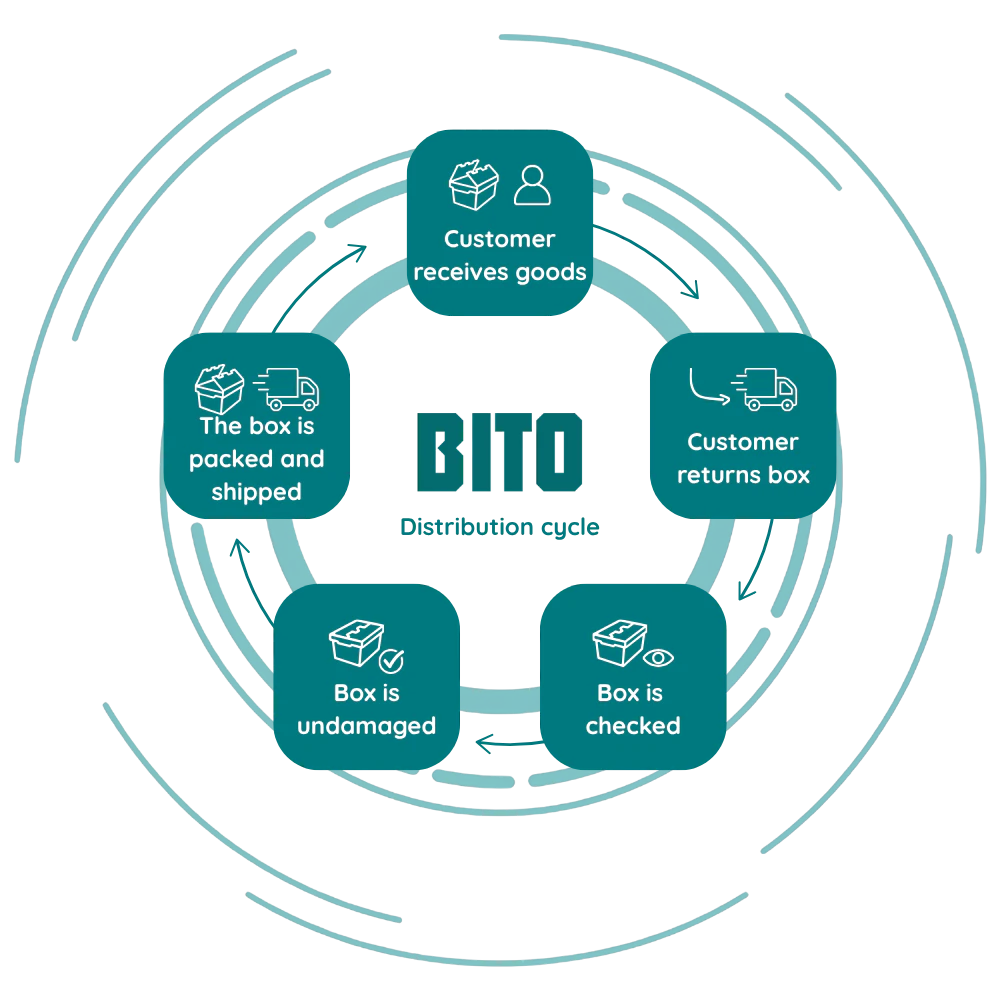
Key requirements for compliance with the PPWR:
- Effective return processes
- Transparent container inventories
- Tracking and traceability
- Packaging design suitable for recycling
- Take-back and recovery at the end of life
Design for Recycling should be taken into account right from the packaging materials development stage. The aim is to keep materials in the cycle for as long as possible and to enable high-quality recovery.
A study by the Fraunhofer Institute demonstrates the potential of multi-purpose containers for resource-efficient recycling. For multi-purpose plastic boxes, the cleaning process per use requires significantly less final energy and fresh water than the recycling of comparable single-use boxes made of paper, paperboard or cardboard. Even for heavily soiled multi-purpose containers, the requirement is less than a fifth. For lightly soiled boxes, the energy requirement is only around one-twentieth and the fresh water requirement around one-twenty-fifth of the comparative figure. 1
1 Fraunhofer UMSICHT (2025): Reuse vs. Recycle – Comparison of energy and water consumption and circularity in the recycling of single-use and reusable packaging
When are multiple-use containers the best choice?
Reusable packaging offers particular advantages for recurring transports and return journeys that can be planned in advance, if
- goods are transported regularly between the same plants
- large volumes of packaging are generated
- return journeys can be organised
- a high level of product protection is required
- packaging costs are to be reduced in the long term
It is not possible to make a general statement. The environmental impact depends, amongst other things, on the number of cycles, transport distance, return rate and utilisation. Therefore, each application should be assessed on a case-by-case basis.
What's better: returnable plastic containers or cardboard boxes?
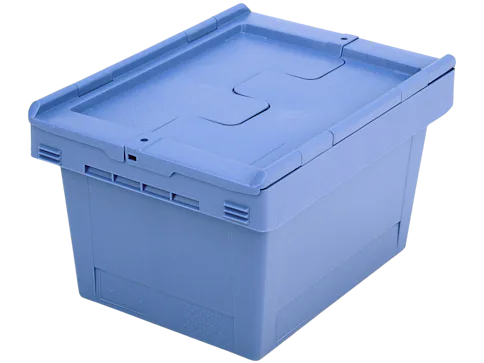
- durable and reusable
- high level of product protection
- digitally traceable
- cost-effective with high circulation figures
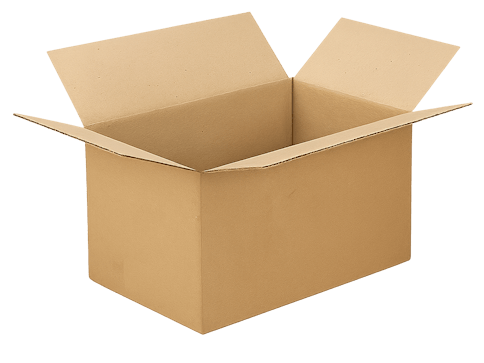
- low purchase cost
- well suited to single-use applications
- recyclable via existing paper recycling schemes
The path to PPWR compliance
The transition from single-use to reusable products will take place in four stages:
- Analysis: Assessment of packaging materials, transport routes, return processes and costs.
- Cost-effectiveness: Determination of container requirements, turnover rates, costs per turnover and payback period.
- System development: Selection of suitable containers, product protection solutions and return processes.
- Operation: Digital solutions support the transparent management of container stocks and turnover rates.
BITO - Your single-source supplier of PPWR solutions
BITO provides support to companies in implementing the PPWR by providing durable reusable packaging and product protection solutions for sustainable logistics processes.
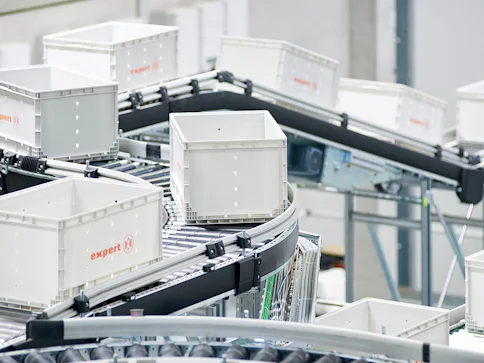
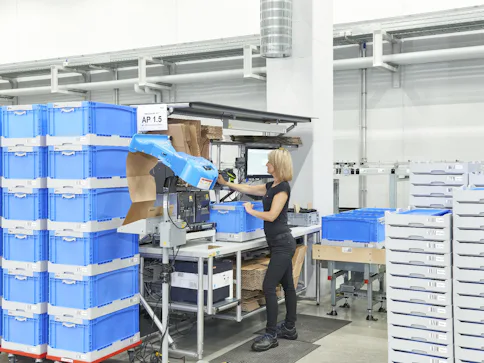
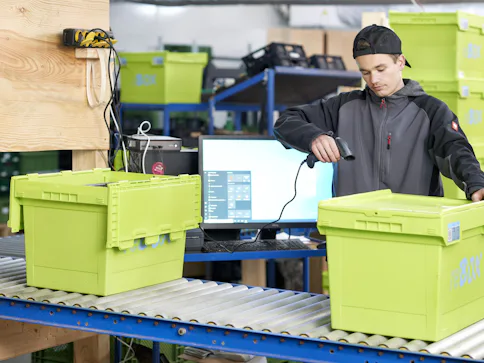
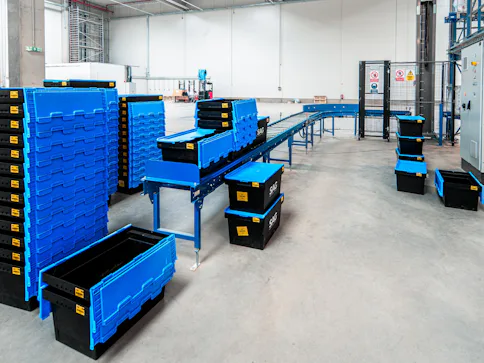
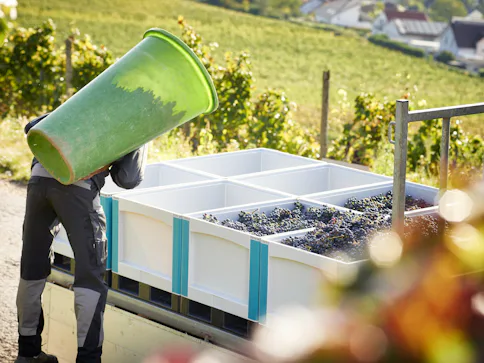
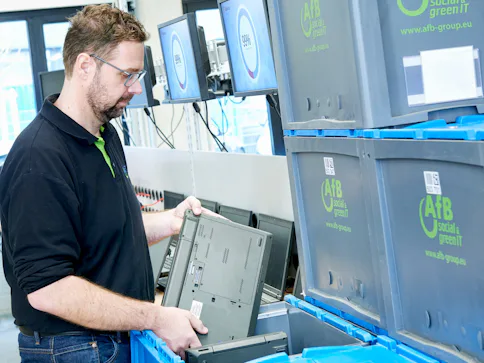
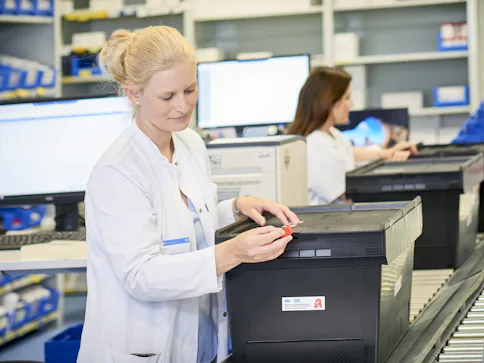
Multi-purpose containers and product protection for sustainable logistics processes
Digital container management with IOB
Digital track-and-trace solutions provide transparency regarding container stocks, cycles and movements. This helps to reduce losses, optimise return processes and efficiently manage container pools.
Return of old BITO containers
Even durable Multi-purpose containers eventually reach the end of their service life. BITO can take back end-of-life BITO containers and send them for recycling.
The recovered material is processed and can be reused in the manufacture of plastic products. This ensures that valuable raw materials remain in the cycle for as long as possible.
FAQ on the Packaging and Packaging Waste Regulation (PPWR)
Does the PPWR also apply to transport packaging?
Yes. The PPWR generally also covers transport packaging materials and industrial packaging materials. Depending on the type of packaging materials, the mode of transport and its use, different requirements and reusability targets may apply.
Will plastic packaging be banned in future?
No. The PPWR does not ban plastic packaging outright. However, it imposes stricter requirements regarding the use of materials, recyclability, the proportion of recycled content and reuse.
Does all plastic packaging have to contain 35 per cent recycled material?
No. The required proportion of recycled material depends on the specific packaging category. The 35 per cent target applies from 2030 to certain other types of plastic packaging. Different targets apply to other categories.
Is cardboard always more sustainable than plastic?
No. The environmental impact depends on the specific application. For single-use applications, cardboard may be a sensible choice. In recurring logistics cycles, durable plastic bins and containers can significantly reduce material consumption and waste through multiple reuses.
When is it worth switching to reusable options?
Reusable packaging is often worthwhile for regular transports, predictable return journeys and large volumes of packaging. A bespoke analysis will show after how many cycles the investment pays for itself.
Does BITO provide support with profitability calculations?
Yes. We analyse your packaging processes and look at acquisition costs, turnover rates, single-use consumption, return rates and potential savings. This can lead to a bespoke ROI assessment.
Can BITO containers be tracked digitally?
Depending on the solution, containers can be labelled and integrated into digital processes via track-and-trace functions. This allows stocks, movements and turnaround times to be managed with greater transparency.
Does BITO take back old containers?
Yes, BITO takes back your old containers. The containers are recycled in accordance with best practice and the material can be reintroduced into the production cycle.
What should companies do now?
Companies should take stock of their existing packaging types, analyse single-use items and identify suitable reusable applications. Applications involving high volumes, regular transport routes and predictable return flows are particularly relevant.