
CO₂-neutral logistics
The transformation to climate-neutral supply chains in logistics requires a holistic approach: efficient, low-emission transport, renewable energy in warehouses, closed material cycles and transparent CO₂ accounting. Find out how you can make your goods flow sustainable and environmentally friendly with innovative technologies and processes.
Why CO₂-neutral logistics is particularly important now
Current climate targets and legal framework
Germany has committed to reducing greenhouse gas emissions by 65% compared to 1990 levels by 2030, by 88% by 2040 and to becoming climate neutral by 2045. Across the EU, stricter CO₂ standards apply to heavy-duty vehicles and a high proportion of emission-free city buses. From 2027, the EU ETS 2 will come into force, covering buildings and road transport. The CSRD/ESRS extends the sustainability reporting requirements.
Impact on intralogistics and transport
Companies must factor rising CO₂ costs for energy and fuels into their planning. Investments in energy-efficient and electric solutions are becoming more attractive economically. Procurement should focus on manufacturers with clear zero-emission roadmaps. In addition, the quality of CO₂ data is becoming increasingly important for the CSRD.
Measures for decarbonising logistics and warehousing
Decarbonisation of vehicle fleets and transport
Short term (0–12 months):
Optimise your route planning with AI, reduce empty runs and use telematics to make consumption transparent. Train drivers in eco-driving, check tyre pressure regularly and reduce rolling resistance. Consider using alternative fuels such as HVO or B100 and involve suppliers with climate strategies.
Medium term (12–36 months):
Launch pilot projects with electric trucks in regional operations and set up charging infrastructure. Increase the use of rail or ship and optimise your hub and network structure. Give preference to transport service providers with proven GHG reductions when awarding contracts.
Long term (36 months or more):
Scale up the use of electric trucks and H₂ drives in long-distance transport, electrify trailer axles and use waste heat and recuperation systems.
Optimisation of warehouse location and buildings
Energy:
Install photovoltaics on roofs or facades, use load management, battery storage and green electricity contracts. Use heat pumps, radiant ceiling heating, insulation and air locks.
Technology and processes:
Modernise your conveyor technology, use LED lighting with sensors and optimise shelf layouts to shorten distances. Automate transport processes with AGV/AMR and integrate your WMS for inventory and route optimisation.
Industrial trucks:
Electrify your forklift fleet with Li-ion technology, create a charging infrastructure and monitor energy consumption.
Circular economy and packaging
Use reusable containers and integrate them into a closed reusable cycle to conserve material resources in the long term. Our containers are foldable or stackable, which means that significantly less space is required for empty runs and transport costs are reduced. Establish repair processes and ensure that materials are sorted by type. Reduce filling and cushioning materials and use a higher proportion of recycled materials.
Organisation and employees
Train employees in energy-efficient driving, energy-saving measures and safety aspects. Introduce incentive systems to reward measurable GHG reductions.
Data, reporting and legal compliance
Measurement and target definition
Determine an emissions baseline according to Scope 1, 2 and 3 and set a target path for 2045. Use dashboards and establish audit routines.
CSRD and ESRS preparation
Conduct a double materiality analysis, standardise your data collection and document internal controls. Actively involve suppliers to record emission factors and certificates.
Using compensation correctly
Prioritise avoidance and reduction
Only use compensation measures for unavoidable residual emissions and select certified projects exclusively.
Transparent communication
Disclose how much of the emission reduction is achieved through your own measures and how much through compensation. Describe projects and their impact.

Container recycling: sustainability as the key to a green future
Plastic container recycling offers many benefits such as waste reduction, conservation of natural resources, energy savings, greenhouse gas and CO2 reductions and the promotion of the circular economy.

Folding boxes help reduce CO2
By adopting multi-use collapsible boxes, a company can improve its carbon footprint. As reusable containers, they offer an alternative to multiple disposable single use containers and save CO2 on the return transport.
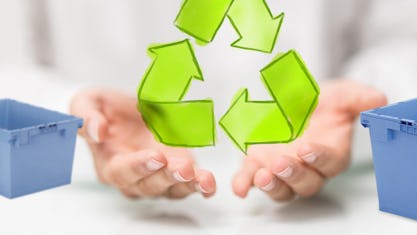
Plastics recycling is becoming increasingly important, even for industrial containers
Through functioning recycling cycles and new recycling technologies, the amount and type of recycled plastic can be increased enormously. Industrial containers are also increasingly made from recycled material.