
Improve efficiency in the Last Mile: How Modern Logistics is Transforming E-Commerce
The last mile is the critical stage of any delivery journey — and in online retail, it often defines customer experience and brand loyalty. With rising parcel volumes, labour shortages and tight delivery windows, UK retailers and logistics providers must adopt smarter, more efficient and more sustainable delivery strategies.
What does “last mile logistics” mean?
The “last mile” describes the final stage of a parcel’s journey — typically from a depot, micro-hub or regional fulfilment centre to the end customer. This phase is complex and cost-intensive, influenced by traffic, narrow delivery windows, failed delivery attempts and the increasing need for greener transport options.
UK consumers expect convenience as standard. Many choose home delivery, while growing numbers prefer timed slots or ultra-fast options such as same-day or next-day. In the B2C sector, dense residential areas and smaller order sizes drive up per-parcel costs and require highly flexible delivery networks.
To remain competitive, e-commerce operators are investing in optimised warehouse design, live pallet racking, automation and smarter route planning — ensuring orders can be fulfilled quickly and reliably.
What is the role of Supply Chain Management in last-mile success?
Robust supply chain management (SCM) is vital to coordinating stock, delivery capacity and fulfilment speed. Digital SCM tools enable retailers and 3PLs to:
- Plan inventory and stock replenishment accurately
- Reduce safety stocks and warehouse holding costs
- Increase delivery reliability for committed time windows
Digitalisation and automation are essential drivers, including automated pallet racking systems, real-time data platforms and AI-driven forecasting tools. For many businesses, intralogistics upgrades such as roller shelving, rack trolleys, bin trolleys and warehouse planning aligned to racking dimensions deliver efficiency benefits from storage to dispatch.
What elements affect the last mile in logistics?
Parcel lockers, click & collect and smart delivery points
To cut transport costs and emissions, retailers and couriers are expanding delivery options beyond traditional home drop-offs:
- Parcel lockers and pick-up points at supermarkets, rail stations and petrol forecourts
- Neighbour collection networks and micro-depots
- Click & Collect and Click & Drive fulfilment from high-street stores
These approaches consolidate deliveries, reduce repeat attempts and shorten delivery routes — supporting more sustainable logistics efficiency and reducing pressure on drivers.
For customer convenience, secure home parcel boxes and smart boxes are also growing in popularity, alongside return kiosks and local collecting trolleys for convenience-led neighbourhood deliveries.
Autonomous delivery & alternative transport
Innovation is accelerating across the UK, with delivery drones undergoing regulatory testing as well as footpath delivery robots already being trialled in cities. E-cargo bikes are also improving speed and access in congested areas.
These solutions complement urban consolidation centres and micro-hubs, cutting congestion and emissions in city centres.
Digital and AI-enabled last-mile optimisation
The last mile can represent up to half of overall logistics costs — making optimisation essential. Technologies shaping modern delivery include:
- AI-enabled route optimisation and predictive planning
- Real-time traffic and CO₂-optimised routing
- Smart order batching for high-density urban zones
- Dynamic vehicle loading strategies
Within warehouses, AI and automation also support rapid order picking, using technology such as roller track systems, automated pallet storage and sensor-based conveyor systems.
Retailers integrating warehouse automation, sustainable delivery modes and digital supply chain control are gaining advantage — ensuring flexibility during peak volumes and enabling consistent service levels.
What is the future of the last mile?
The rapid growth of e-commerce has intensified the pressure on fulfilment operations, warehouse automation and intralogistics infrastructure.
Modern last-mile operations rely on more than delivery technology alone. They require aligned warehouse processes — from picking efficiency to outbound loading. Solutions from BITO such as pallet live storage, automated pallet racking, Carton live storage and automated small parts storage help businesses build scalable and safe intralogistics environments.
The most successful UK operators will be those who:
- Invest in automated, flexible warehouse infrastructure
- Deploy AI-enabled route optimisation and delivery planning
- Expand parcel locker and collection-point networks
- Embrace low-carbon delivery options
With customer expectations rising and sustainability targets tightening, the last mile is no longer just a delivery challenge — it is a competitive differentiator.
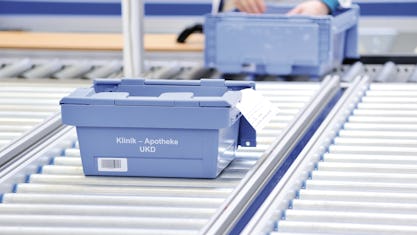
Container: Key position in material flow
Containers play a major role in the material flow. As load carriers and information transmitters, they are also very important for process optimization in the company.
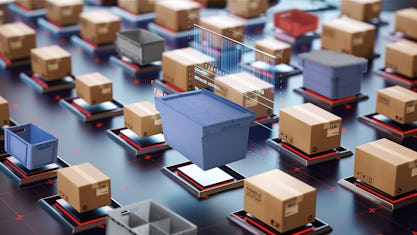
Blockchain in logistics
New blockchain solutions are developed almost daily. Small and medium-sized enterprises (SMEs) in particular should not miss the boat. The good news is that there are many ways to get started with this promising technology.