
Hall height, fire protection, and floor requirements in warehouses – what you should consider when planning
When planning a warehouse, you should always consider hall height, fire protection, and floor requirements as an interconnected system. The height of stored goods directly influences the requirements for extinguishing technology and smoke extraction. Industrial floors must be able to withstand high point loads from racking systems – often, it is not the load-bearing capacity that is decisive, but the deformation under load. And the building geometry has an impact on fire protection concepts and technical building equipment. Early coordination of these factors creates planning security, speeds up approvals, and prevents costly retrofits.
Hall height and fire protection in warehouse planning
What really counts: the height of the stored goods
For the fire protection assessment, it is not the height of the building that is decisive, but the height of the stored goods, i.e., the upper edge of the stored material including pallets or containers. Requirements are derived from this:
- Automatic extinguishing systems
- Fire compartment sizes
- Smoke and heat extraction systems
- Organizational measures
Standard thresholds
Up to approx. 7.5 m storage height
In individual cases, organizational measures and structural fire compartments may be sufficient. This depends heavily on the stored goods, packaging, and insurer requirements.
From approx. 7.5 m storage height
Above this height, an automatic sprinkler system is almost always required in practice. Depending on the stored goods – the fire load is usually the decisive factor here – in-rack sprinklers may already be necessary in this area.
From approx. 9 m storage height
The requirements increase significantly. Rack sprinklers or specially designed ceiling sprinkler solutions become more common, often with increased extinguishing water quantities and additional structural requirements.
From approx. 12 m storage height
These are usually high-bay warehouses with a project-specific extinguishing concept. Standard solutions are rarely possible here.
Define fire protection strategy early on
VdS or FM Global – major differences in design
The choice of insurer and the underlying guidelines (e.g., VdS CEA 4001 or FM Global Data Sheets) influence:
- Type and arrangement of sprinklers
- Required extinguishing water quantities
- Technical areas and water storage
- Permissible storage heights and storage types
- Aisle widths and sprinkler clearance areas
Early specification prevents subsequent redesigns in the layout.
Ceiling sprinklers vs. rack sprinklers
Ceiling sprinklers cover a large area, but are highly dependent on the stored goods, distance to building components, and potential spray obstructions. In dense or high racking systems, the flow of water to the lower levels can be significantly reduced by shielding.
Shelf sprinklers act directly on the shelf and are often the more effective solution for high or dense shelving systems – even at medium heights.
Fire compartments complement the extinguishing technology
Structural separation limits the spread of fire, automatic extinguishing systems ensure active fire protection
Fire compartments serve to limit the spread of fire. In classic hall uses, smaller fire compartments can sometimes play a role without an extinguishing system.
However, the situation is different in large-volume racking warehouses, especially in high or automated systems:
As storage heights and fire loads increase, automatic extinguishing systems become a central component of the fire protection concept. Fire compartments are then generally used as a supplement, not as a replacement.
The fire protection concept typically consists of a combination of:
- automatic extinguishing system
- structural fire compartments
- smoke extraction
- organizational measures
Escape routes and rescue
The benefits are decisive
The requirements for escape and rescue routes depend on usage, occupancy, and the property-specific fire protection concept.
A distinction must be made between:
- manually operated storage areas with permanent staff presence
- automatically operated racking systems that are not accessed during normal operation
Automated racking systems are not usually permanent work areas. Access is usually only permitted for maintenance or service purposes under special safety conditions. The specific design of escape routes is carried out by the responsible specialist planners and authorities as part of the overall fire protection concept.
Smoke extraction and smoke and heat extraction systems in the warehouse
Integrate smoke extraction concepts into hall planning at an early stage
Smoke and heat extraction systems must be adapted to the height of the hall, its use, and the rack layout. Racks, platforms, and enclosures have a significant influence on smoke flow.
The following should be planned at an early stage:
- Location and size of smoke extraction openings
- Supply air ducting
- Possible smoke curtains
- Maintenance and service access
Floor requirements for shelves
It is not the pressure that is critical, but the deformation
High point loads act on shelf supports. However, it is usually not the permissible floor pressure that is decisive, but rather the deformation of the floor under load.
Excessive deformation can lead to:
- System tolerances being exceeded
- Guidance systems changing their position
- Additional forces being introduced into the rack structure
Verification is carried out in an iterative process between the floor structural engineer and the rack structural engineer. Load distribution plates alone are often not sufficient to control local deformation behavior.
Flatness is of secondary importance
Unevenness can be compensated
For large racking systems, the initial flatness of the floor is usually less critical than the deformation behavior. Local unevenness can be compensated for during assembly, for example by:
- Adjusted anchoring
- Underlayments under base plates
- Systematic leveling of the shelving structure
Within limited limits, such floor deviations can be compensated for by the shelving system using the above measures without impairing the functionality of the system.
Surfaces and coatings
Uncoated concrete provides secure anchoring and maximum flexibility
An uncoated, load-bearing concrete surface is often advantageous for shelving systems. Additional coatings such as epoxy resin can impair the quality of anchors and underlays and make subsequent adjustments more difficult.
Coatings should therefore be planned specifically for traffic areas, not across entire racking systems.
Consider assembly and installation aspects at an early stage
Early coordination prevents subsequent conversions and downtime
In addition to structural and fire protection requirements, the following should be considered at an early stage:
- Sprinkler clearance areas
- Maintenance and service access
- Coordination of joint planning and support positions
- Insertion openings and lifting options
- Fire department access routes and water supply
Conclusion
Hall height, fire protection, and floor requirements are closely linked in terms of technical aspects when planning a warehouse. As storage heights increase, automatic extinguishing systems become the norm, fire compartments supplement the technology, and the focus shifts to the deformation behavior of the floor.
Considering these issues together at an early stage creates a solid foundation for the approval, construction, and safe operation of modern racking systems.
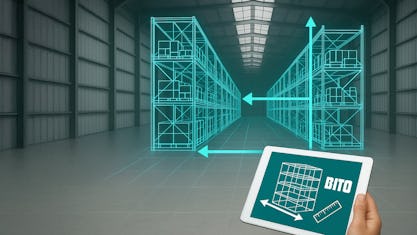
Optimal use of space in the warehouse
Efficient use of space is crucial for the profitability of a warehouse. Through strategic planning and modern warehouse technologies, you can significantly increase your storage capacity without the need for additional floor space. The following eight core strategies show you how to get the most out of your available storage space.

Automated storage systems and their advantages at a glance
Automated warehouse systems are becoming increasingly important in modern logistics. They enable companies to speed up processes, reduce error rates and cut costs sustainably. But what exactly is behind them and what specific benefits do they offer for a company's success?
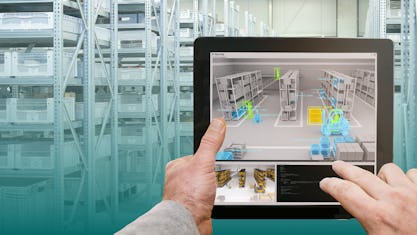
Innovative storage system
Optimising space, increasing efficiency and intelligent processes - these are the three core objectives of modern warehouse technology, which is consistently developing in the direction of Industry 4.0. More and more companies are therefore relying on networked, automated warehouse logistics to secure their competitiveness and set new standards in terms of sustainability.