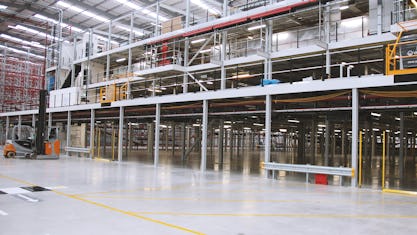
Special features of pharmaceutical logistics
Medicinal products are subject to special provisions during transport . For example, temperature conditions must be kept within an acceptable range throughout the entire journey.
Have you ever wondered how pharmaceuticals get safely from the manufacturers to the pharmacies, hospitals, doctors and online orders of medicines to the end users? How is the quality of pharmaceuticals ensured in pharmaceutical logistics? What regulations apply and what means of transport are used in the pharmaceutical industry and logistics?
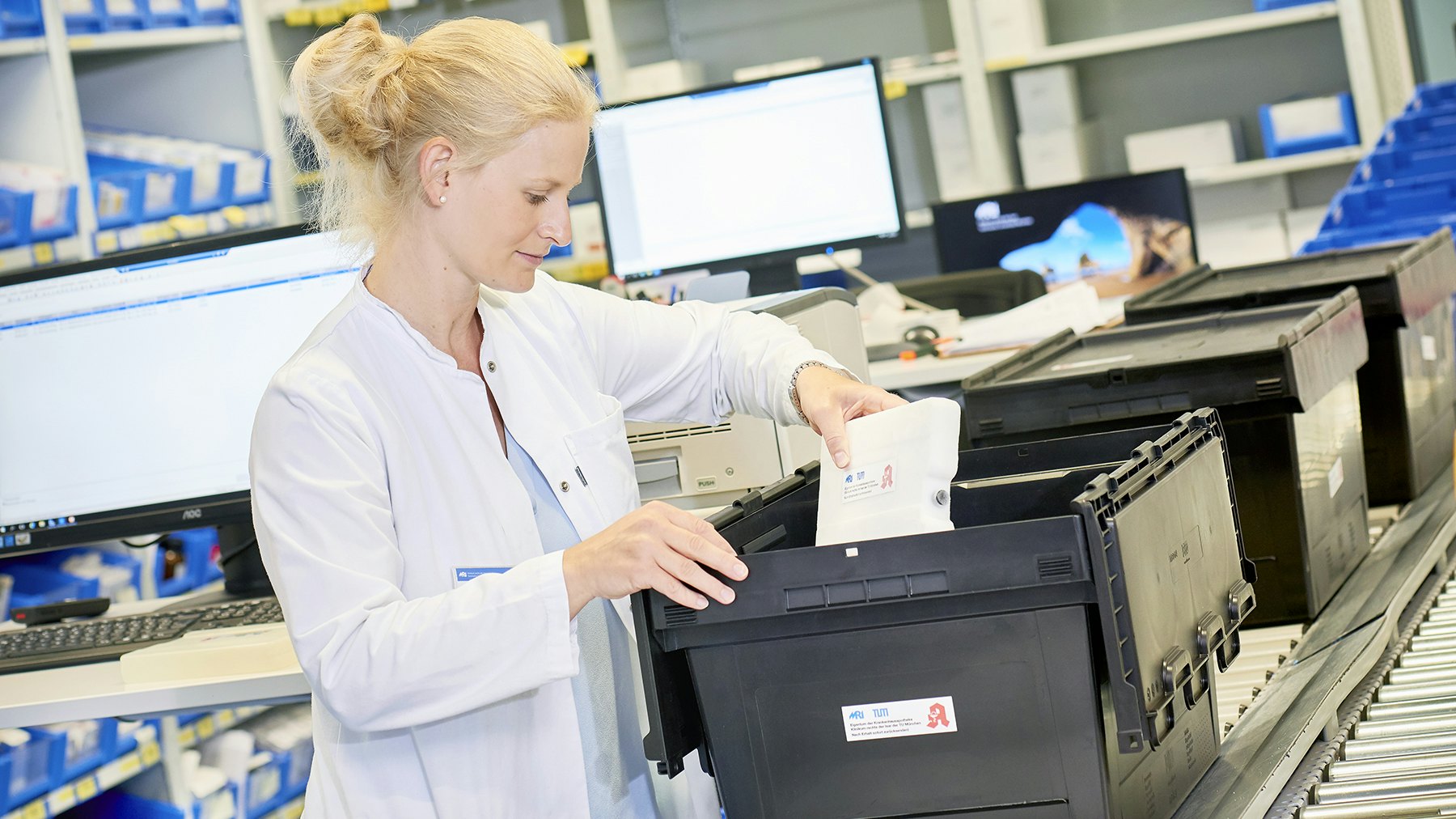
The importance of temperature control and hygiene in pharmaceutical logistics
Temperature control and hygiene play a critical role in pharmaceutical logistics to ensure the efficacy and safety of medications and pharmaceutical products. According to the EU guidelines of Good Distribution Practice (GDP), it is necessary that pharmaceutical products are transported and stored under strict temperature conditions. This prevents the loss of drug efficacy that can be caused by temperature fluctuations. In addition, high hygiene standards must be maintained to avoid product contamination and ensure patient safety. Adherence to strict guidelines is essential to maintain product integrity and compliance in pharmaceutical transport and storage.
Legal regulations and requirements in pharmaceutical logistics
Pharmaceutical logistics in the GCC region, particularly in the UAE, is governed by a combination of international and national regulations designed to ensure the quality, safety, and integrity of medicinal products across the supply chain. Key frameworks include Good Distribution Practice (GDP), adopted from EU and WHO guidelines, which apply to all entities involved in pharmaceutical storage and distribution—requiring licensing, temperature control, traceability, and auditable quality systems. Good Manufacturing Practice (GMP) standards also extend to logistics by mandating strict controls over warehouse hygiene, equipment, and inventory handling. International guidelines from the World Health Organization (WHO) and the International Air Transport Association (IATA)—particularly CEIV Pharma—are widely recognized across GCC air cargo hubs, ensuring compliant transport of temperature-sensitive medicines. In the UAE, the Ministry of Health and Prevention (MOHAP) mandates GDP certification, oversees controlled substances, and enforces participation in Tatmeen, the national serialization and track-and-trace platform. Similarly, Saudi Arabia’s SFDA operates the RSD system and imposes rigorous GDP/GMP compliance. Other GCC states follow harmonized procedures under the GCC Central Committee for Drug Registration (GCC-DR). Cold chain compliance is essential, with strict requirements for temperature monitoring, calibrated equipment, and documentation. Facilities storing hazardous or controlled pharmaceuticals must adhere to additional safety standards set by entities such as Dubai Municipality and Civil Defence, including risk assessments, fire safety, and segregation measures. Furthermore, companies must train personnel according to GDP protocols and maintain robust documentation, including SOPs, deviation reports, recall procedures, and audit records. Together, these overlapping regulations form a comprehensive framework that ensures pharmaceutical products across the GCC are handled, stored, and transported under strict regulatory oversight from origin to point-of-use.
Safety measures and quality control in the pharmaceutical industry
Both GDP and GMP prescribe certain security measures and controls, particularly with regard to the logistics of pharmaceutical products. In addition, the Act for more Safety in the Supply of Medicinal Products (GSAV) was enacted in August 2019. It aims to increase the security of the supply of medicinal products and to strengthen the public's trust in the supply of medicinal products. According to GDP, pharmaceutical products must be stored and transported under conditions that comply with the manufacturer's specifications. This includes temperature control and monitoring to ensure that the products maintain their quality during transport and storage. In addition, seamless documentation of all processes is required. Regular inspections and audits must be carried out to ensure compliance with all GDP guidelines. The GMP requires that the storage conditions meet the specific requirements of the medicinal products. This includes monitoring environmental conditions such as temperature, humidity and light exposure. GMP also includes requirements for the safe transport of pharmaceuticals to avoid contamination or loss of quality during transport. This may include special containers or transport conditions, such as maintaining certain temperatures. In addition, seamless documentation of all processes and procedures related to storage and transport is required. The records are crucial for traceability and for audits. The GSAV requires the improvement of the transparency of supply chains, in particular through more precise information on the origin of the active ingredients and the production routes. The main provisions of the law include increased controls and documentation requirements for manufacturing processes, in particular for imports, as well as extended reporting requirements for manufacturers with regard to risks and side effects. The law also promotes systems for improved traceability and transparency to facilitate monitoring and enable rapid responses in the event of recalls. In addition, stricter requirements for the supply chain and preventive measures against supply bottlenecks and increased quality standards for generics are being called for through stricter bioequivalence tests.
Challenges in the delivery of sensitive medicines
The delivery of sensitive medicines, such as vaccines and biological products, poses numerous challenges for pharmaceutical logistics. One of the most important requirements is strict temperature control during transport and storage in order to maintain the effectiveness of the medicines. In addition, maintaining the safety and integrity of medicines requires effective protective measures against theft, adulteration and damage. Compliance with a large number of national and international regulations complicates logistics processes, especially for cross-border deliveries. Precise documentation and knowledge of legal regulations are generally required. Supply bottlenecks, e.g. due to sudden changes in demand, which can have serious consequences for patient care, must be avoided at all costs. The implementation of advanced traceability systems to efficiently manage recalls, for example, is essential. In addition, the flexibility of the supply chain is crucial in order to adapt quickly to unforeseeable events such as interrupted supply routes
Secure cold chains in pharmaceutical logistics
Pharmaceutical products are usually stored at room temperatures of 15-25°C, whereas many medications require refrigerated storage at temperatures of 2-8°C. In a low temperature environment, molecular movement slows down, the reactivity of chemical compounds decreases, germ growth is suppressed and the stability and shelf life of medications improve. Even minimal temperature fluctuations can have a significant impact on the lifespan and effectiveness of pharmaceuticals. According to GDP guidelines, the prescribed storage conditions must be strictly adhered to throughout the entire transport route, as specified by the manufacturer or noted on the packaging. In particular, the temperature of pharmaceuticals requiring refrigeration should be between +2°C and +8°C throughout, in order to maintain the integrity of the cold chain. Adherence to these conditions is required by the German Medicinal Products and Active Pharmaceutical Ingredients Ordinance (AMWHV) and the GDP. Logistics service providers that want to enter the pharmaceutical sector are required to obtain a GDP certificate. According to the German Logistics Association (BVL), the process is demanding and complex and is monitored by the regional councils of the respective federal states. The specific requirements vary from state to state.
Transport and storage of temperature-sensitive pharmaceuticals
When transporting temperature-sensitive pharmaceuticals, there are various categories such as those requiring refrigeration, those requiring transport at room temperature and cold chain products, whereby the latter require constant temperature maintenance throughout the entire supply chain. Cooling during transport can be done either actively with refrigerated vehicles or passively with insulated containers. Cold storage warehouses or refrigerators are usually used for storage. Temperature loggers and RFID transponders are used to monitor the temperature. Bulk deliveries to pharmaceutical wholesalers and bulk purchasers such as hospitals are carried out using temperature-controlled trucks that comply with GDP guidelines. GDP requirements also apply to cool boxes. Cold packs must not come into direct contact with the pharmaceuticals and must be positioned accordingly. In its fact sheet ‘Kühllagerung von Arzneimitteln’ (Cold Storage of Medicinal Products), the Federal Union of German Associations of Pharmacists points out that staff must be trained in the correct handling of insulated containers – which varies according to the season – and in the reuse of cold packs. In addition, a control system should be implemented that prevents the inadvertent use of insufficiently cooled batteries and ensures a clear separation between frozen and chilled elements.
Containers for pharmaceutical transport and logistics
When transporting temperature-sensitive pharmaceuticals, a distinction is made between cold chain, transport at room temperature, storage in the refrigerator and cold chain, which means that the prescribed temperature must be maintained throughout the entire supply chain. Cooling during pharmaceutical transport can be achieved by actively cooled means of transport and vehicles, but also by passively cooled containers (e.g. with insulated inserts). Cold stores (cold storage) or refrigerators are usually used for storage. Temperature loggers and RFID transponders are used to monitor the cold chain. Deliveries of large quantities to pharmaceutical wholesalers – but also to bulk purchasers such as hospitals – are carried out by truck. Pharmaceutical shipments are temperature-controlled and carried out in GDP-compliant and certified vehicles. Even cool boxes must comply with GDP guidelines. If ice packs are used, they must be placed so that the pharmaceuticals do not come into direct contact with them. The Federal Union of German Associations of Pharmacists provides the following information in its fact sheet ‘Cold Storage of Medicinal Products’:
- Staff must be trained in the procedures for assembling insulated containers (which vary according to the season) and reusing freezer packs.
- There should be a system for monitoring the reuse of freezer packs to ensure that insufficiently cooled packs are not inadvertently used.
- There should be adequate physical separation of frozen and chilled cooling elements.
The BITOBOX MB with thermal insulation set is ideal for pharmaceutical logistics and the logistics of temperature-sensitive goods such as medicines, vaccines, etc.. The insulation set ensures a temperature of between two and eight degrees for at least twelve hours. This is achieved by a Neopor foam insert, which provides high insulation values, and three Icecatch Solid Isolated cooling elements. These are equipped with an integrated hydrophobic insulation layer to prevent the goods from freezing.
GxP-compliant Pharmabox system from BITO
BITO's passively cooled Pharmabox system includes the reusable MB container, available in sizes with 4 and 15 litre capacities, together with a thermal insulation set consisting of inlays and various cold pack solutions. This system is complemented by the Smarthub gateway & beacon monitoring system, which captures important data in real time, serves as a digital seal when storing and transporting pharmaceutical items, and enables GxP-compliant handling of sensitive goods. The MB containers are made of robust plastic and have an inlet for the Smarthub. A beacon can be installed inside the container for precise temperature and humidity monitoring, whereby both parameters are continuously recorded and documented in accordance with GDP. The asset tracking system minimises the risk of theft and tampering and ensures the consistent quality of medicines and pharmaceutical products during transport. In the event of deviations in temperature and/or humidity, the Smarthub sends an alert. The current geolocation of the assets can also be provided on request.